Your first boudoir photoshoot sounds terrifying on paper. Most people expect to feel awkward, stiff, and unsure of what to do with their hands — and most people walk out shocked by how wrong that expectation was. The secret is preparation and the right photographer. With both in place, what starts as nervous energy almost always turns into something you’ll be proud of.
This guide covers everything: what boudoir photography actually is, how to find the right photographer, what to wear, how to prep your skin and hair, posing tips that actually calm nerves, and exactly what to bring on the day of your session. Whether you’re doing this for yourself, as a gift, or because you’ve been putting it off for years — you’re in the right place.
What a Boudoir Photoshoot Actually Is (and What It’s Not)
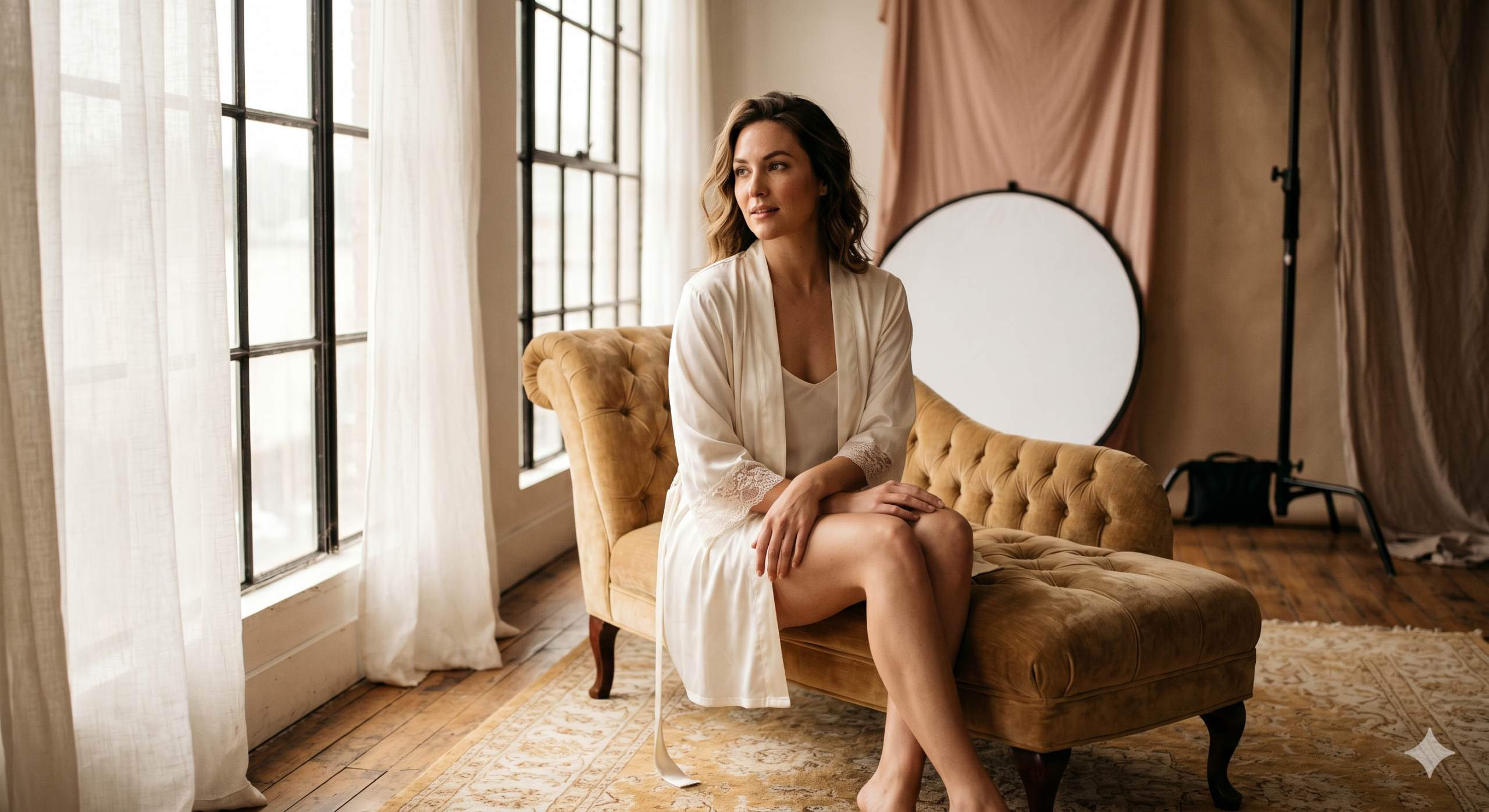
A boudoir photoshoot is an intimate portrait session — usually featuring lingerie, robes, bodysuits, oversized shirts, or whatever makes you feel confident and like yourself. It’s glamorous, personal, and almost always different from what people imagine beforehand.
What it’s not: a modeling test, a before-and-after project, or something reserved for a specific body type, age, or look. A well-run boudoir session is less about how you look and more about how you feel in the images. A skilled photographer’s entire job is to get you there — the posing, the lighting, the coaching — all of it is designed to make you look incredible. Your job is to show up.
Boudoir is for every comfort level too. You decide how much you show, what vibe you want, and what feels authentic. Nothing is required beyond what you’re actually comfortable with.
How to Choose the Right Boudoir Photographer
This is the decision that shapes everything else. Your boudoir photographer sets the tone for the entire experience — especially if it’s your first session. Price matters less here than fit, style, and trust.
When you review portfolios, look for body diversity (not just one body type represented), a retouching style you genuinely like, and evidence that the photographer actually coaches clients. Reviews that say things like “I had no idea what I was doing and felt so at ease” are more valuable than five-star ratings without specifics. Members of professional associations like the Professional Photographers of America are held to ethical and quality standards that matter in an intimate specialty like boudoir.
Before you book, ask these questions directly:
- Do you provide posing direction throughout the session?
- What’s your privacy policy — will my images be shared anywhere?
- Is hair and makeup included, or can you recommend someone?
- How do you handle retouching — natural, minimal, or full glam?
- What happens if I get nervous? (The best photographers have a real answer to this.)
A quick phone or video call before booking tells you more about fit than any portfolio alone. You want someone who’s rooting for you — because the photographers worth hiring genuinely are. If you’re based in Las Vegas or visiting the city, check out the portrait gallery at Photography by Wayne to get a feel for the style.
Planning Your Boudoir Wardrobe
Outfits for a boudoir photoshoot are less about following rules and more about what makes you feel like a slightly elevated version of yourself. A piece you love and feel confident in will always outperform something trendy that makes you self-conscious.
Good starting points for a first session:
- A lace or satin lingerie set — classic because it works
- A bodysuit — often more secure and flattering than people expect
- An oversized button-down shirt or soft knit — personal, cozy, and surprisingly versatile on camera
- A silk or satin robe as a layering piece or transition outfit
- A simple sheet or fitted slip for a more editorial, minimal look
Aim for 2–4 outfits total. More than that eats into actual shooting time. Prioritize fit over size labels — a well-fitting piece photographs beautifully at any size. Bring options and let your photographer weigh in once they see everything together; they often have strong instincts about what reads well on camera.
Accessories to consider: simple jewelry (studs, hoops, a delicate chain), heels or boots if you like them, and a meaningful personal item — a wedding veil, a partner’s dress shirt, a leather jacket. Many studios provide props like chairs and champagne glasses; ask in advance what’s available. And wear loose, non-elastic clothing to your session — tight waistbands leave marks that take time to fade.
Skin, Hair, and Beauty Prep
You don’t need a full transformation before a boudoir photoshoot — just some thoughtful preparation in the days leading up to it. The glow people want in photos is usually just consistent basic care.
For skin: exfoliate gently and moisturize every day for 3–7 days before your session. Skip any new skincare products in that window — this is not the week to experiment. Drink water consistently. It actually shows in photos.
For hair: if you’re booking a professional stylist (many studios offer this as an add-on, and it’s almost always worth it), arrive with clean, dry hair unless told otherwise. Going DIY? Stick with a style you already feel good in — soft curls and loose waves are boudoir classics because they hold through outfit changes and look natural on camera.
For nails: hands appear in a lot of boudoir poses, so a fresh manicure and pedicure makes a real difference. Neutral tones, classic red, and French tips all photograph well. Avoid chipped polish. If you wax, shave, or use self-tanner, do it 48 hours before your shoot — not the morning of — so any redness or irritation has time to settle.
Boudoir Posing Tips That Actually Work
You will not be left to figure out poses on your own. A good boudoir photographer guides you through every position — that’s a core part of what you’re paying for. But knowing a few basics before you arrive takes the edge off and helps you respond faster when you’re being coached.
A few things to practice in the mirror beforehand:
- Shift your weight to one hip — instant natural curves and a more relaxed stance
- Chin slightly forward and angled down — flattering for almost every face and angle
- Relax your jaw and part your lips slightly — softer, more natural expression
- Imagine a thread lifting gently from the crown of your head — creates a longer, more elegant neck line
- Practice your eyes: straight into the lens, looking down with a slight smile, looking away
The mindset shift that works best in a boudoir session: stop thinking “posing” and start thinking slow movement. A slow inhale, a slight shoulder turn, tucking a strand of hair back, adjusting a strap — those micro-movements create images that look alive rather than staged. Your photographer will cue these. Trust them.
For more confidence-building techniques that carry over into any kind of portrait session, the general photoshoot prep guide covers the mindset side in more depth.
What to Bring on the Day of Your Session
A simple checklist so you’re not scrambling the morning of:
- 2–4 outfits with matching underwear for each
- A strapless bra if needed for any outfit
- Heels, boots, or shoes — even if you’re not sure you’ll use them
- Jewelry and accessories
- Non-greasy lotion and lip balm
- Water and a light snack (you’ll have more energy and feel better)
- Your inspiration images — share them with your photographer at the start
Arrive in loose, comfortable clothing. Many studios provide robes — confirm ahead of time. Get a solid night of sleep the night before, eat something nourishing before you go, and skip anything that makes you feel bloated if you’re sensitive to it. The goal is to feel good in your body, not to be perfect.
Communicating Comfort and Setting Boundaries
This part often gets skipped in boudoir guides, and it shouldn’t. You are always in charge of what happens in your session. A good photographer expects you to communicate — and actively wants you to.
At any point during your boudoir photoshoot, you can ask for more posing guidance, take a break, skip a pose that doesn’t feel right, or shift the entire tone of the shoot. You can go more modest or more bold than your original plan. Nothing is locked in. The session is collaborative, and your comfort is not negotiable — it’s the foundation of getting images you’ll actually love.
On the financial side, it helps to go in with realistic expectations. Vegas boudoir sessions generally range from a few hundred dollars for an entry-level package to $1,500 or more for a full experience with hair, makeup, and styling — see the FAQ below for a fuller breakdown. Our Las Vegas photographer pricing guide covers general portrait, event, and wedding rates if you’re comparing options or budgeting for add-ons.
Frequently Asked Questions About Boudoir Photography
Do I need to be a certain size or age to do boudoir photography?
No. Boudoir is for every body type, age, and comfort level. The most accomplished boudoir photographers shoot a genuinely diverse range of clients and know how to use light and posing to flatter every body. What matters most is showing up willing — the rest is the photographer’s job.
What should I wear to my first boudoir photoshoot?
Plan for 2–4 outfits you genuinely feel confident in — a lace or satin set, a bodysuit, an oversized shirt, or a robe are all solid starting points. Prioritize fit over size labels, bring a few options, and let your photographer help you decide what photographs best on the day.
Do I need professional hair and makeup for a boudoir session?
It’s not required, but it’s worth considering. Makeup applied for camera reads differently than everyday wear — usually heavier, more defined — and a professional makeup artist knows how to calibrate that. Many studios offer hair and makeup as a package add-on. If you go DIY, go a little bolder than you normally would; it translates better on camera.
What if I get nervous during my boudoir photoshoot?
You almost certainly will at some point — and that’s completely normal. The nerves usually fade within the first few minutes of actually shooting. Take a breath, tell your photographer how you’re feeling, and let them adjust. Every experienced boudoir photographer has a rhythm for working through first-timer nerves. It’s part of what you’re hiring them for.
How do I know if my boudoir photos will stay private?
Ask your photographer directly before you book — and get it in writing. Reputable photographers have clear policies about whether images can be shared, how, and where. If anyone is vague or dismissive when you ask about image privacy and consent, that’s a red flag. It’s a non-negotiable question, and any photographer worth booking will have a straightforward answer.
How long does a boudoir photoshoot typically take?
Most sessions run between one and three hours, depending on the package, number of outfits, and whether hair and makeup are included. A two-hour session is a common sweet spot — enough time to warm up, change outfits a couple of times, and get a real variety of images without feeling rushed.
How much does a boudoir photoshoot cost in Las Vegas?
Las Vegas boudoir photography pricing varies based on session length, package inclusions, and whether hair and makeup are added. Entry-level sessions typically start around $300–$600 for a short session with digital files, while mid-range packages with professional hair, makeup, and a larger image gallery generally run $600–$1,500. Premium studio experiences with multiple looks and print products can climb past $2,000.
Your first boudoir photoshoot is almost never what you expect — and almost always better. With the right photographer, a wardrobe that actually fits, a little skin prep, and a few posing basics in your back pocket, you’ll walk in nervous and walk out with photos you genuinely love. Most people say the same thing afterward: they wish they’d done it sooner.
Recent Posts
Las Vegas Photographer Prices (2026): What Every Type of Shoot Really Costs
Las Vegas photographer prices can run anywhere from a couple hundred dollars to several thousand — sometimes for what looks like the same type of shoot. That's not an accident. This city has an...
How to Photograph the Las Vegas Sphere: Best Angles, Settings & Shooting Spots (2026)
You're walking east on Sands Avenue, heading back from the Venetian after a long evening on the Strip, when it stops you cold. The Las Vegas Sphere rises above the roofline without warning — a...